
- Home
- News & Events
- Articles
- ♻️ Radiation vs. Plastic Pollution?
♻️ Radiation vs. Plastic Pollution?
August 1, 2025
Yes — You Read That Right.
After addressing myths about nuclear radiation and safety, it’s time for a more positive narrative: We often associate radiation with danger. However, what if it could help tackle one of today's most critical environmental and public health challenges?
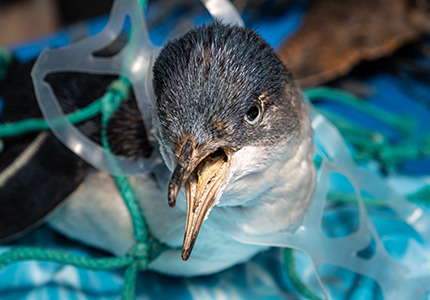
Every year, the globe generates approximately🔗 400 million tonnes of plastic waste, with just about 9% being recycled. The rest ends up poisoning our oceans, land, and even our bodies. Concerns about plastic pollution are no longer just environmental; they’re personal.
Recent research published in Nature Medicine has confirmed what scientists have long feared: microplastics have been found in human brain tissue, with concentrations increasing significantly since 2016. As the health implications of plastic waste become clearer, the need for scalable solutions grows more urgent.
As the health implications of plastic waste become clearer, the need for scalable solutions grows more urgent.
Through the IAEA’s NUTEC Plastics initiative, over 50 countries are using nuclear techniques to:
→ Develop biodegradable, bio-based plastics
→ Upcycle plastic waste into stronger, more valuable materials (like wood-plastic composites for construction)
→ Improve sorting, separation, and recycling efficiency without toxic chemicals
→ Convert plastic waste into fuels and industrial additives through radiation-assisted pyrolysis

These materials are completely safe; they don’t retain any radiation after treatment. Radiation simply triggers transformation, like how an X-ray passes through your body without staying behind. In a recent conversation to mark World Environment Day, Celina Horak, Head of the IAEA’s Radiochemistry and Radiation Technologies Section, emphasized:
“This work is more than research — it's a commitment to building a circular economy that safeguards our ecosystems.”This is nuclear technology in action, clean, innovative, and solution-focused. Radiation-based technologies offer one of the cleanest and most scalable tools to help reduce plastic waste before it breaks down into micro- or nano-particles.
Canada Is in the Game, Too
This shift isn’t just happening overseas.
Right here in Canada, researchers at the Canadian Irradiation Centre (CIC) — in collaboration with RESALA and supported by the IAEA — are using gamma, electron beam, and X-ray technology to develop eco-friendly food packaging made from natural fibers.
These materials are:
→ Biodegradable
→Chemically safe
→ Strengthened through irradiation
→ Designed to reduce plastic packaging waste
It’s a promising local example of how nuclear innovation can support sustainability, without compromising safety or performance.
Why Does Stuart Hunt & Associates Care?
Because this is our field — and our future.
We support technologies that:
✅ Protect people and the environment.
✅ Use radiation responsibly.
✅ Turn science into real-world impact.
We support clean-tech initiatives like NUTEC Plastics because we are committed to a safer, smarter, and more sustainable future for our clients and the planet.
SOURCES:
- IAEA – NUTEC Plastics IAEA – NUTEC Plastics Initiative 🟢 Main article about the initiative and its impact 🔗
- IAEA – NUTEC Plastics IAEA on Canada’s Irradiated Packaging Research 🔗
- Nature Medicine – Microplastics Found in Human Brain Tissue 🔗
- Science (2004) – “Lost at Sea: Where Is All the Plastic?” 🔗
#RadiationSafety #PlasticPollution #Microplastics #Sustainability #CleanTech