- Home
- All Products
- Echo Ultrasonics EchoTherm™
Echo Ultrasonics EchoTherm™
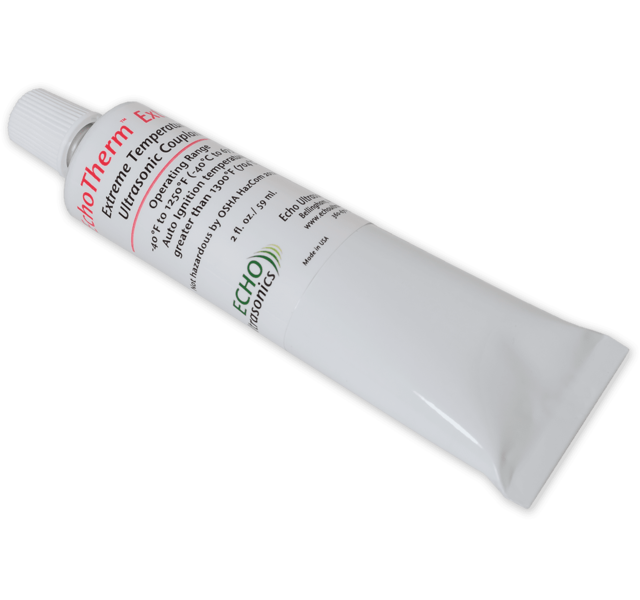
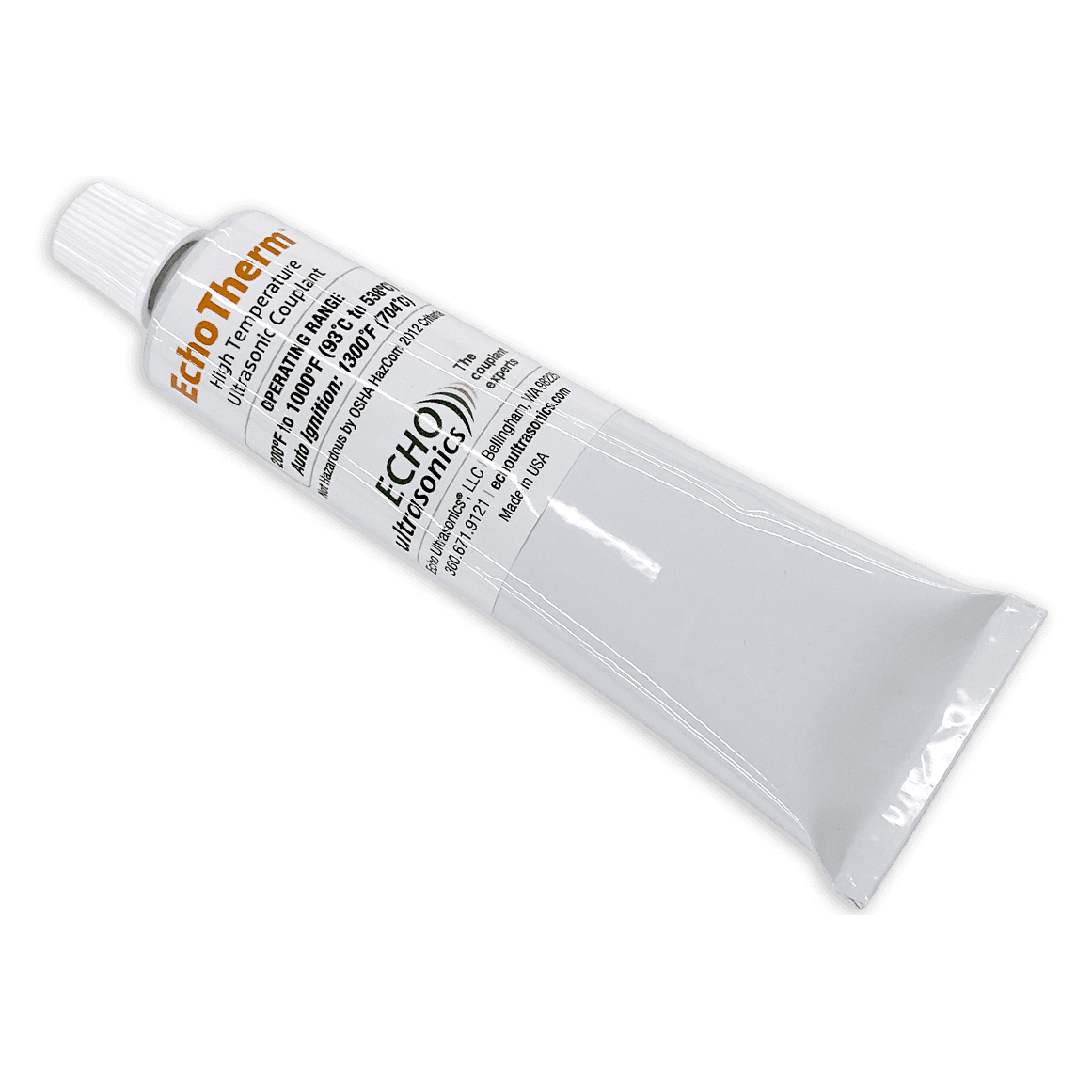
EchoTherm is a high-temperature ultrasonic couplant designed for thickness gauging and corrosion testing in extreme inspection environments. It offers an exceptionally wide operating temperature range from -400°F to 1250°F (-40°C to 675°C), with an auto-ignition temperature of 1300°F (704°C) for added safety in high-heat applications.
Formulated as a high-viscosity paste, EchoTherm adheres securely to the transducer, helping maintain consistent coupling during inspections on hot or cold surfaces. The couplant contains a specialized polymer that melts and begins to smoke at approximately 750°F (400°C), extending its usable temperature range and ensuring reliable ultrasonic signal transmission at elevated temperatures.
Importantly, EchoTherm does not require reaching this melting temperature to obtain accurate readings, allowing for dependable performance across a wide range of operating conditions. EchoTherm is well suited for high-temperature thickness measurements and corrosion inspections where stability, safety, and performance are critical.+
Specifications
| Auto Ignition Temperature* |
1300°F (704°C). * Test by John A. Kennedy & Assoc., ASTM E659-14 |
| Viscosity | Thick paste |
| Corrosion Characteristic | N/A |
| Other |
EchoTherm contains a polymer which melts (and begins to smoke) at 750F, which extends the operating range, however, it is not necessary to reach this temperature to obtain instant readings. If you are testing below 700°F, VersaSonic is the ideal broad temperature couplant with an operating range of -10 to 700°F. |
| Packaging |
|
Features
- Extremely wide operating temperature range from -400°F to 1250°F (-40°C to 675°C)
- High-viscosity paste formulation that adheres securely to the transducer
- Designed for high-temperature thickness gauging and corrosion testing
- Polymer-enhanced formulation extends performance at elevated temperatures without requiring melting to obtain readings
Related Products